
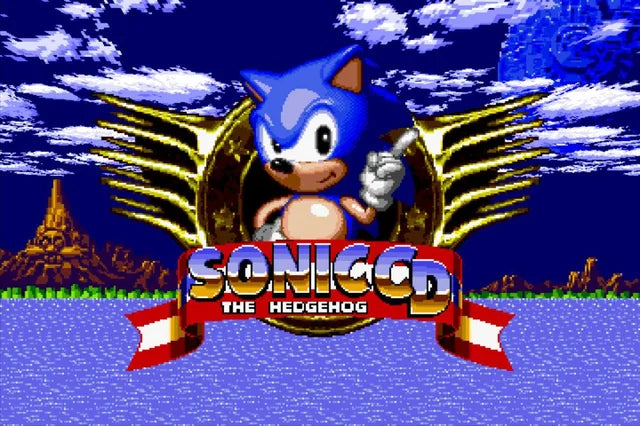
Sonic CD Full Review: Why This Game Is a Cult Game Among Fans
1414 words | Reading time: 8 minutes
GameSonic CDSega CD
Released in 1993 on Sega CD, Sonic CD owes its status as a niche classic to a time-travel system that gives every zone a past, a present, a bad future and a good future. The analysis looks back at Little Planet and the Time Stones, then at the first appearance of Amy Rose and Metal Sonic, whose Stardust Speedway duel would be replayed in Generations and Mania. It also details the two competing soundtracks, the one by Naofumi Hataya and Masafumi Ogata in Japan against Spencer Nilsen's in North America, and the Majin Sonic riddle, a joke by developer Masato Nishimura that became an urban legend.
Released in 1993 on the Sega CD, Sonic CD is often considered one of the most unique — and enigmatic — titles in the Sonic series. With its nonlinear levels, time travel, cult soundtrack, and the first appearances of Amy Rose and Metal Sonic, this game made its mark on the franchise's history. Here’s a complete analysis of what makes Sonic CD a beloved game for the blue hedgehog’s most loyal fans.
Table of Contents
1. A unique technological context: the Sega CD
Sonic CD was designed to take advantage of the Sega CD's capabilities, an add-on for the Mega Drive. This allowed for improved graphics, animated cutscenes, and, most importantly, CD-quality music.
- Developer: Sonic Team Japan (a separate team from Sonic 2 in the United States)
- Release date: 1993 (Japan and North America)
- Original platform: Sega CD / Mega-CD

His iconic rival
Small "Metal Sonic" Figurine - 6cm
Sonic CD marked the very first appearance of Metal Sonic: get your hands on the hedgehog's mechanical double with this figurine.
€14.90
View product →
🎧 The Sega CD add-on above all gave Sonic CD its CD-quality music, as early as 1993; your own listening now fits into a pair of wireless earbuds, and our Sonic AirPods cases keep them from rolling around loose at the bottom of your bag.
2. Gameplay based on time travel
The most striking feature of Sonic CD is its time travel system. Each zone can be explored in four versions:
- Past
- Present
- "Bad" Future
- "Good" Future
By activating a Time Warp sign and running long enough without stopping, Sonic travels to another era. By destroying the robot generators in the past, the player ensures a peaceful future.
3. The introduction of Amy Rose and Metal Sonic
Sonic CD is also a cornerstone of the series' lore. It introduces for the first time:
- Amy Rose (aka Rosy the Rascal), Sonic's romantic admirer
- Metal Sonic, Sonic's mechanical doppelganger, now emblematic of the saga
Their confrontation on Stardust Speedway remains iconic and has been reinterpreted in Sonic Generations and Sonic Mania.

4. Two soundtracks, two atmospheres
Rare for its time, Sonic CD offers two very different soundtracks depending on the region. This divergence has created a real cultural divide among fans.
| Version | Musical style | Composers | Intro song |
|---|---|---|---|
| Japan / Europe | Jazz-funk, pop, electro | Naofumi Hataya, Masafumi Ogata | « You Can Do Anything » (Toot Toot Sonic Warrior) |
| North America | Ambient, synth, experimental | Spencer Nilsen, David Young | « Sonic Boom » |
Both OSTs are now cult classics, often remixed by fans or performed at official Sega concerts.
5. Level design: freedom or chaos?
The game focuses on vertical exploration rather than pure speed, which divides players:
- Some praise the open and creative approach
- Others criticize the legibility, lack of rhythm, and confusion
However, this level design perfectly supports the time travel concept by encouraging the search for the right paths to switch to the past.
6. Majin Sonic: a cult mystery
In a Japanese version of the game, a hidden screen triggered via the sound test (codes FM 46, PCM 12, DA 25) displays a frightening face accompanied by Japanese text meaning "Fun is infinite. Sega Enterprises -Majin". This face, a blend of Sonic's and a human's, has become an urban legend.
💡 Behind the codes FM 46, PCM 12 and DA 25, Sonic CD lights up a hidden screen reading “Fun is infinite. Sega Enterprises -Majin”; our Sonic neons and LED signs light your own wall in the same spirit, minus the Majin face that came with it.
- Real explanation: a simple joke by developer Masato Nishimura ("Majin" being his childhood nickname)
- Theories: "demonic Sonic," ancestor of Sonic.EXE, etc.
- Consequence: Majin Sonic has become a recurring meme in fangames and creepypastas

7. Influence on Sonic Mania and fangames
Sonic CD largely inspired Sonic Mania:
- Stardust Speedway is recreated with its duel against Metal Sonic
- The time distortion effects and psychedelic palette recall the CD atmosphere
- Many levels use a comparable multi-path logic
The fangame community (like Sonic Time Twisted, developed by Overbound) also adopts the time mechanics or the game's psychedelic aesthetic.
🧦 Sonic Mania replays the Stardust Speedway duel and keeps the psychedelic palette inherited from Sonic CD: colours like those are far easier to wear between your jeans and your trainers than anywhere else on your outfit, and that is exactly the ground our Sonic socks cover.
Conclusion
Sonic CD is a unique game in the saga: its singular aesthetic, unconventional gameplay, iconic characters, and unique soundtrack have made it a niche classic that has become essential. It continues to fascinate with its risk-taking, experimental atmosphere, and willingness to push the boundaries of 2D platformers. A game that proves the Sonic series isn't just about running straight ahead... but also about traveling through time.
FAQ
-
What is the difference between Sonic CD US and JP?Mainly the soundtrack: the Japanese version is more dynamic, the American version is more atmospheric. The content is identical.
-
Does time travel change the gameplay?Yes: destroying generators in the past ensures a good future, which changes the appearance, music, and outcome.
-
Where does Sonic CD fit in the chronology?It takes place between Sonic the Hedgehog 1 and Sonic 2.
🔎 To learn more: Little Planet and the Time Stones, Sonic.EXE and the complete Sonic gameography.