Sonic Games Timeline: The Evolution of the Saga
1263 words | Reading time: 7 minutes
GuideSegaMega Drive
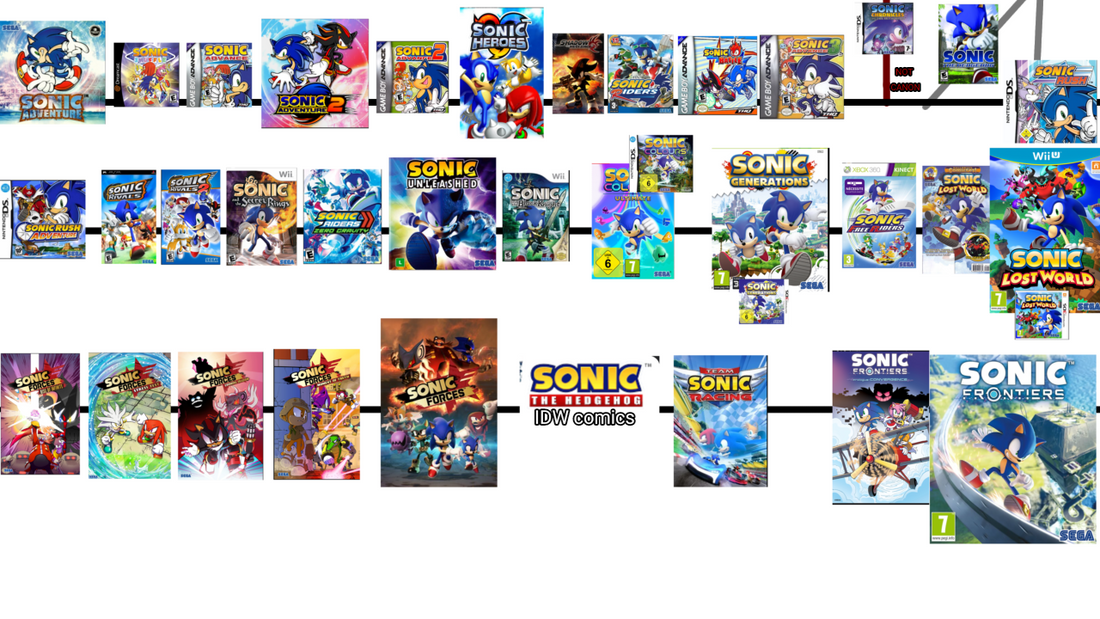
Thirty years of the saga are read here decade by decade, from Mega Drive cartridges to the open world. The 1990s set Sonic up as Mario's direct rival and stack up the milestones: Tails in 1992, Amy Rose and Metal Sonic in Sonic CD, Knuckles in 1994, the Lock-On cartridge of Sonic & Knuckles, then the successful move to 3D with Sonic Adventure on Dreamcast. Next comes the decade of experimentation, between Shadow's arrival in 2001, the Werehog concept and the shipwreck that was Sonic 2006. Then follow Sonic Mania, made by fans turned developers, and the free-roaming gameplay of Sonic Frontiers.
From the Mega Drive to today's consoles, Sonic the Hedgehog has sped through more than thirty years of video games. Rather than an exhaustive catalog, here is a timeline of the major milestones that have shaped the saga, decade by decade. (For a complete list of all games, check out our complete Sonic gameography.)
Table of Contents
The 1990s: The 2D Golden Age
The 90s saw Sonic's meteoric rise. As Sega's mascot, he directly rivaled Mario and introduced a dynamic alternative to the video game landscape.
- 1991 – Sonic the Hedgehog (Mega Drive / Genesis, Master System, Game Gear)
- 1992 – Sonic the Hedgehog 2 (introduction of Tails)
- 1993 – Sonic CD (introduction of Amy Rose and Metal Sonic)
- 1994 – Sonic the Hedgehog 3 (appearance of Knuckles)
- 1994 – Sonic & Knuckles (unique Lock-On cartridge)
- 1995 – Knuckles' Chaotix (32X – spin-off with the Chaotix team)
- 1996 – Sonic 3D Blast (first attempts at isometric 3D)
- 1997 – Sonic R (first fully 3D racing game)
- 1998 – Sonic Adventure (Dreamcast – successful transition to 3D)

The saga in a display case
Sonic Figurine Set - 8 Pieces
After this journey through the decades, gather the heroes of the entire saga with this set of 8 Sonic figurines.
€56.90
View product →🔑 In 1994, the saga got its Lock-On cartridge, the only one built to clip onto another cartridge: our Sonic keychains replay that little clip-on move, this time on your keyring.
The 2000s: 3D Experimentation
After the fall of the Dreamcast, Sonic sought a new path on competing consoles. This was a testing period, with both technical successes and controversial choices.
- 2001 – Sonic Adventure 2 (introduction of Shadow)
- 2002 – Sonic Advance (GBA – return to 2D)
- 2003 – Sonic Heroes (3-player team gameplay)
- 2005 – Shadow the Hedgehog (dark spin-off, mixed reception)
- 2006 – Sonic 2006 (failed launch and massive bugs)
- 2008 – Sonic Unleashed (Werehog concept)
- 2009 – Sonic and the Black Knight (Arthurian theme)
The 2010s: Back to Roots and Fans
This decade was about refocusing. Sonic tried to reconnect with his roots, while modernizing some classics.
- 2010 – Sonic Colors (very well received)
- 2011 – Sonic Generations (2D/3D mix for the 20th anniversary)
- 2013 – Sonic Lost World (Galaxy-inspired)
- 2014 – Sonic Boom: Rise of Lyric (major failure)
- 2017 – Sonic Mania (2D return by fans turned devs)
- 2017 – Sonic Forces (avatar creation, lukewarm reception)
👖 In 2017, Sonic Forces had you build your avatar piece by piece; your own outfit adjusts one notch at a time, the notch that a Sonic belt pulls tight at the waist.
The 2020s: The Modern Revival
Sega is experimenting again with Sonic, with remasters, compilations, and open-world titles.
- 2021 – Sonic Colors: Ultimate
- 2022 – Sonic Origins (remastered compilation)
- 2022 – Sonic Frontiers (open-world gameplay)
- 2023 – Sonic Superstars (2D return, modern graphics)

Announced or Upcoming Games
- 2024 – Sonic x Shadow Generations
- 2024 – Movie DLC for Sonic x Shadow Generations (level tied to the Sonic 3 movie, released December 20, 2024)

Major Spin-offs and Crossovers
- Sonic Battle – fighting (GBA)
- Mario & Sonic at the Olympic Games – crossover series
- Team Sonic Racing (2019)
🏅 Mario & Sonic at the Olympic Games lines two rival mascots up for the same events: our Sonic shorts kit you out for your own, even if they stop at a lap around the block.
Conclusion
For over 30 years, Sonic the Hedgehog continues to reinvent himself. Whether it's crazy 2D races, 3D adventures, or nostalgic tributes, Sonic maintains his signature speed while exploring new paths. With movies, spin-offs, and modern technologies, Sonic's future promises to be faster than ever.
Summary Sheet
| Element | Detail |
|---|---|
| Main Character | Sonic the Hedgehog |
| Publisher | Sega |
| First Game | Sonic the Hedgehog (1991, Mega Drive) |
| Transition to 3D | Sonic Adventure (Dreamcast, 1998) |
| 2D Return by Fans | Sonic Mania (2017) |
| Open World / Free Gameplay | Sonic Frontiers (2022) |
| Saga Duration | Over 30 years of evolution |
FAQ
-
When was the very first Sonic the Hedgehog game released?In 1991, on Mega Drive/Genesis, Master System, and Game Gear. It established Sonic as Sega's mascot, a direct rival to Mario.
-
When were key characters like Tails, Knuckles, and Shadow introduced?Tails appears in Sonic 2 (1992), Amy Rose and Metal Sonic in Sonic CD (1993), Knuckles in Sonic 3 (1994), and Shadow in Sonic Adventure 2 (2001).
-
Which game marked Sonic's successful transition to 3D?Sonic Adventure, released on Dreamcast in 1998, successfully transitioned the series to 3D.
-
Why is Sonic 2006 remembered?For its failed launch and massive bugs, which made it one of the most controversial episodes in the series.
-
What is Sonic Mania and why is it notable?Released in 2017, it's a return to 2D developed by fans who became developers, hailed as a nostalgic tribute to the classics.
🔎 To learn more: Trip the Sungazer.